Many businesses see their digital marketing cost climb each quarter without seeing leads or revenue grow at the same pace. If that sounds familiar, you are likely facing rising customer acquisition cost (CAC), the total sales and marketing spend needed to win one new customer.
SEO and paid ads are the two main ways to be found when people search. They work differently, cost differently and pay back over different timelines. This guide explains how each one works, where each fits, and how to decide on SEO vs paid ads without guessing. It also shows how to split your budget and bring CAC down.
Why Are Customer Acquisition Costs Rising?
Rising CAC rarely has a single cause. Common drivers include:
- More advertisers bidding on the same keywords, which can push up cost per click (CPC)
- Landing pages that turn few clicks into enquiries
- Broad targeting that reaches people who will never buy
- Low-quality leads your sales team cannot close
- Changes in customer behavior, such as comparing options across search, social media and AI assistants before making contact
Google Ads Help explains that your actual CPC depends on auction competition and ad quality, not only your bid. A click can cost more because rivals bid harder, or because your ad and landing page score poorly.
This is why traffic and clicks make poor scorecards. A campaign with cheap clicks and no sales is expensive. Judge each channel by cost per lead (CPL), CAC and revenue.
SEO vs. Paid Ads: Understanding the Difference
How SEO Works
SEO (search engine optimization) improves your website so it can earn unpaid, or organic, visibility on search engine results pages (SERPs). You invest in helpful content, technical health, site structure and credibility. A Mumbai dental clinic, for example, might publish clear pages on treatments and pricing so it appears when locals search for them.
How Paid Ads Work
Paid advertising, often called PPC (pay-per-click), places sponsored listings alongside organic results. With Google Ads, you bid in an auction and are usually charged when someone clicks. In an SEO vs PPC or SEO vs Google Ads comparison, this is the paid side. The same clinic could run ads for “root canal near me” starting this week.
The Core Differences
- Cost structure: SEO costs are mostly skilled work and time. Ads charge for clicks.
- Traffic: In organic traffic vs paid traffic terms, ads switch on quickly and stop when spending stops. Organic traffic builds gradually.
- Long-term value: A well-built page can keep attracting visitors long after it is published.
SEO vs. Paid Ads: Which Is More Cost-Effective?
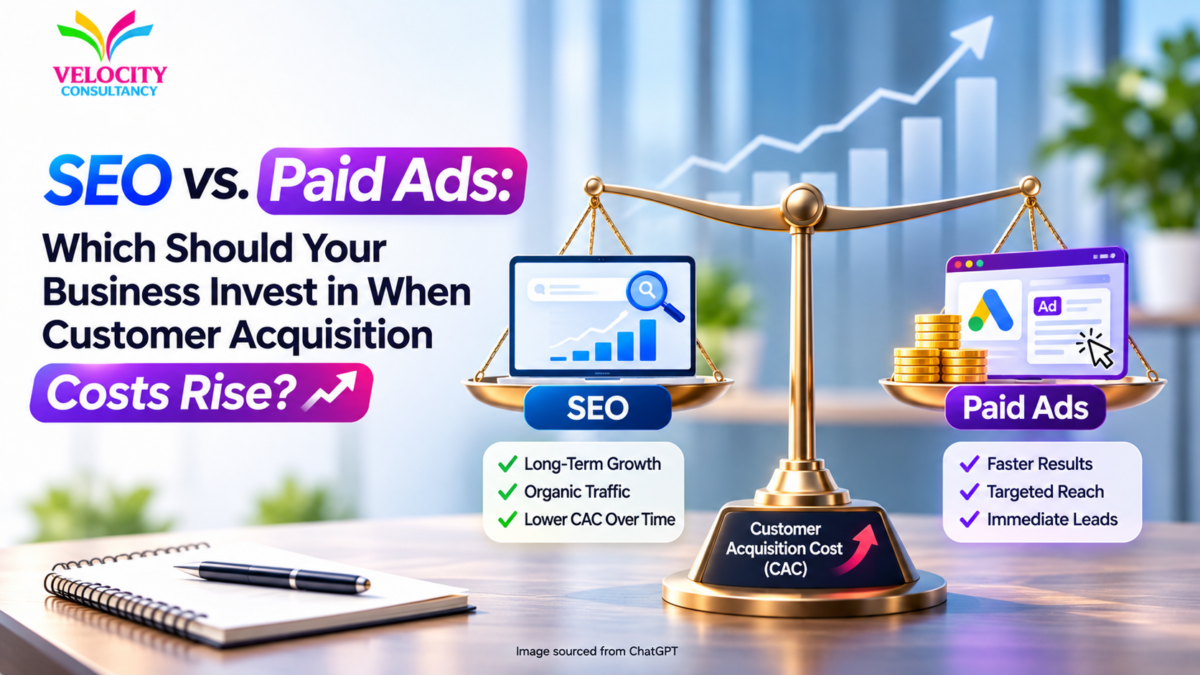
In the paid advertising vs organic search debate, neither channel is always cheaper. The cost of SEO vs paid ads depends on your market, margins and timeline.
| Factor | SEO | Paid ads |
|---|---|---|
| Initial investment | Audit, content, technical fixes | Account setup, creatives, landing pages |
| Ongoing cost | Content, links, maintenance | Media spend on every click |
| Cost per lead | Often higher early, may fall as pages mature | Visible quickly, can rise with competition |
| Long-term ROI | Can compound if rankings hold | Ends when spending ends |
| Competition | Contested rankings | Contested bids |
| Time to results | Typically months | Days to weeks |
SEO is not free. It needs steady investment, and rankings are never guaranteed. Google’s SEO Starter Guide says changes can take anywhere from a few hours to several months to show up in search results. Paid ads, meanwhile, need continuous spending to keep traffic flowing.
Here is a simple hypothetical. A business spends ₹100,000 on ads and wins 20 customers, so CAC is ₹5,000. Blended CAC falls only if organic leads also convert, so calculate it with your own numbers.
When Should Your Business Invest in SEO?
SEO is a strong fit when you:
- Want visibility that does not vanish when an ad budget pauses
- Sell to people who research through informational and commercial searches, like “best accounting software for small teams”
- Want to build credibility through helpful, well-structured content
- Need to diversify lead sources and depend less on ads
- Can commit to consistent content and website improvements
Set realistic expectations. Results vary by site age, industry and competition, and early months often go to foundations such as technical fixes and content. Treat SEO for business growth as a long-term investment, not a quick fix. Our SEO services page explains how we approach this.
When Should Your Business Invest in Paid Ads?
Paid advertising for business growth often works best as a starting point when you:
- Are a new business that needs immediate visibility
- Are launching a product or promoting a time-sensitive offer
- Want to target specific locations, audiences or search terms
- Need to test new services, messages or landing pages quickly
- Want leads within a defined campaign window
Ads do not guarantee conversions. Performance depends on targeting, budget, competition, landing page quality and conversion tracking. Without tracking, you cannot tell which keywords produce enquiries and which only produce clicks.
Why Combining SEO and Paid Ads Can Be a Better Strategy
Used together, SEO and paid advertising can form one of the more cost-effective digital marketing strategies, because each covers the other’s weak spots.
- Ads give speed while SEO builds momentum.
- Paid search data shows which keywords and messages bring leads, so you can prioritize those topics in SEO content.
- SEO content answers questions that a short ad cannot.
- Retargeting can remind relevant visitors who read your content but did not enquire.
- Landing page improvements lift conversion rates on both channels.
- Two channels reduce the risk of one failing, whether through a bidding war or a ranking drop.
So, can SEO and paid ads work together? Yes. For many businesses, a balanced mix is more resilient than choosing one.
How to Reduce Customer Acquisition Costs
Start with fixes that often cost little:
- Improve landing pages with a clear offer, fast loading and a simple form. Google treats landing page experience as part of ad quality. See our website lead readiness checklist.
- Match search intent. Someone searching “pricing” is closer to buying than someone searching “what is.”
- Prioritize lead quality over traffic volume.
- Review targeting. Add negative keywords and refine audiences to cut irrelevant clicks.
- Track conversions accurately, including form submissions and calls.
- Monitor CPL and CAC monthly, not just clicks.
- Publish organic content that answers questions customers already ask.
- Review performance regularly and pause what does not pay back. If ads get clicks but no leads, read why your Google Ads are not converting.
Frequently Asked Questions
1. Why are customer acquisition costs increasing?
More advertisers compete for the same searches, which can raise bids and CPC. Weak landing pages, broad targeting and low-quality leads also push CAC up, because more spend is needed per customer. Changing buyer behavior adds pressure too.
2. How does SEO help reduce acquisition costs?
Well-built pages can keep attracting relevant visitors without a fee per click, so blended CAC may fall as organic leads grow. This is not guaranteed. It depends on rankings, content quality and whether organic visitors convert.
3. When should a business invest in paid ads?
Paid ads suit new businesses, product launches, time-sensitive offers and tests of new messages or pages, where speed matters. Results still depend on targeting, budget, competition, landing page quality and accurate conversion tracking.
4. Can SEO reduce dependence on paid advertising?
Yes, gradually. As organic pages earn steady enquiries, you rely less on any single paid channel. Most businesses keep some ads running while SEO matures, then adjust the budget based on cost per lead and revenue.
5. How do I measure SEO and paid ad ROI?
Set up conversion tracking, then compare cost per lead, CAC and revenue for each channel. Ads show spend directly, while SEO also needs its costs, such as content, tools and support, tracked. Review over several months, since organic results build slowly.
6. Should a business invest in SEO or PPC first?
It depends on urgency and cash flow. If you need leads within weeks, start with PPC while fixing your website basics. If you can wait months, begin SEO sooner. Many businesses run both from the start.
7. How can SEO improve customer acquisition efficiency?
SEO attracts people already searching for what you offer. Improvements to site clarity, speed and content can also lift conversion rates for all traffic, including paid. Better-qualified visitors can mean a lower cost per lead.
Conclusion: Choosing the Right Mix for Your Business
The right call in SEO vs paid ads (or SEO vs paid marketing more broadly) depends on your goals, budget, competition, industry and timeline. Paid ads can deliver speed, while SEO can build lasting visibility. Judge both by leads, CAC and revenue rather than clicks alone.
If you would like help weighing your options, Velocity Consultancy offers SEO and performance marketing services. You can explore them at velocityconsultancy.com.


 15+ Years Of Expertise
 100% Confidential